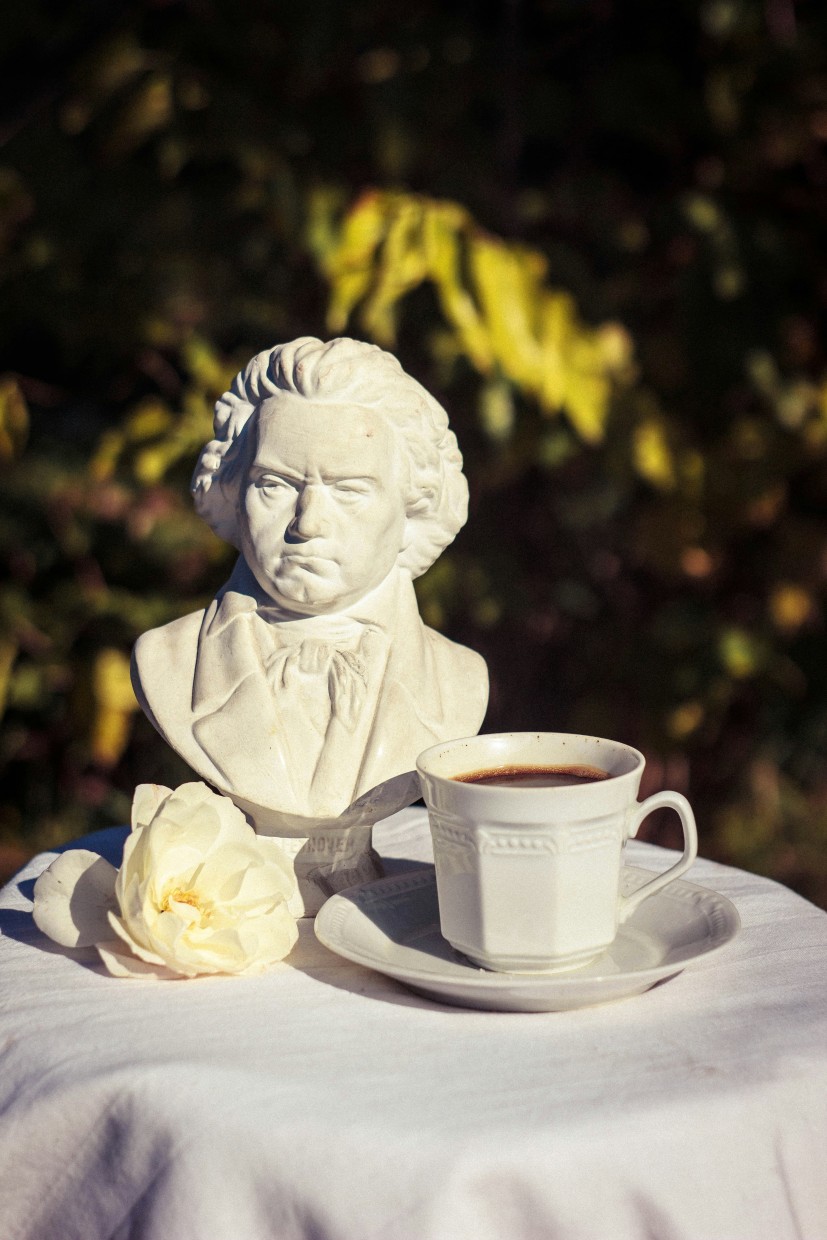
Beethoven's compositions carry a raw emotional force that pulls in creators from every corner of music. His bold innovations continue to spark ideas for artists pushing boundaries in studios and concert halls alike.
Beethoven's Unique Place Among Famous Classical Composers
Ludwig van Beethoven towers over famous classical composers like Mozart and Haydn through sheer intensity. Mozart delivered flawless symmetry in his operas and concertos, while Haydn laid groundwork with structured wit in his quartets. Beethoven took those foundations and shattered them, weaving personal turmoil into every note. This Beethoven music influence shifted the focus from polite entertainment to raw human struggle, setting a new standard for expression.
Take his "Symphony No. 3", the "Eroica". Initially dedicated to Napoleon, Beethoven scratched out the name when he crowned himself emperor, channeling betrayal into thunderous brass and restless strings. Famous classical composers such as Schubert absorbed this energy, letting their own symphonies swell with inner conflict. Schubert's "Unfinished Symphony" echoes Beethoven's abrupt emotional turns, proving how one man's defiance rippled outward.
Beethoven's middle period burst with heroic scale. The "Fifth Symphony" hammers its famous "fate knocking at the door" motif, building tension that resolves in triumphant C major. Haydn never dared such relentless drive; his surprises stayed light. Beethoven demanded listeners confront darkness before light, a tactic that famous classical composers like Brahms later mirrored in their own dense textures. Brahms wrestled with Beethoven's shadow for decades, expanding sonata forms to match that depth.
His late works dive even deeper. The "String Quartet Op. 131" unfolds in seven continuous movements, blending fugues with lyrical sighs. Deaf by then, Beethoven crafted these from pure inner hearing, inspiring composers to trust instinct over ear. This fearless evolution marks the core of Beethoven music influence, urging artists to evolve beyond formulas.
How Beethoven's Innovations Reshape Modern Creativity
Beethoven didn't just compose—he reinvented the rules. Sonata form under his hands stretched into vast emotional landscapes, far from the tidy balances of earlier eras. In the "Waldstein Sonata", he layers trills and arpeggios into a sunrise of sound, delaying resolution to heighten drama. This technique fuels Beethoven's influence on today's songwriters, who borrow delayed payoffs for pop hooks and EDM drops.
Dynamic contrasts became his signature. The "Pathétique Sonata" plummets from stormy chords to whispering sighs, a range Haydn hinted at but never unleashed. Modern pianists like Lang Lang revive these shifts in recitals, while film composers channel them into epic scores. Hans Zimmer nods to this in scores like "Interstellar", where quiet builds erupt into orchestral swells—pure Beethoven DNA.
Rhythmic vitality set him apart too. "Symphony No. 7"'s second movement pulses with a steady dotted rhythm, almost dance-like in its obsession. Stravinsky later echoed this in "The Rite of Spring"'s primal beats, bridging classical to modern. Jazz legends like Duke Ellington studied Beethoven's offbeat accents, folding them into swing patterns that swing harder, as noted in Interlude.hk's breakdown of his rhythmic legacy.
Even harmony bent to his will. Late piano sonatas introduce dissonant clusters that resolve uneasily, foreshadowing Schoenberg's atonality. Contemporary artists in ambient genres layer similar tensions, creating immersive soundscapes. Beethoven's willingness to unsettle ears keeps his music influence alive in experimental scenes.
Emotional Power Drawing in Today's Musicians
Beethoven poured life's chaos into music, turning deafness and isolation into anthems of resilience. The "Appassionata Sonata" rages with fist-like chords, then melts into tender song—mirroring his own battles. Musicians today chase that authenticity, prioritizing feeling over perfection. Indie rock bands sample his motifs, twisting them into gritty anthems that hit visceral notes.
His choral masterpiece, the "Ninth Symphony", crowns it all. The "Ode to Joy" finale unites soloists, chorus, and orchestra in universal brotherhood—a radical leap for symphonies. Conductors like Herbert von Karajan brought this to global stages, as detailed in Carnegie Hall's Beethoven timelines. Modern choirs and festivals perform it yearly, inspiring songwriters to blend voices across genres.
Jazz pianist Bill Evans dissected Beethoven's slow movements for their harmonic richness. Evans wove those colors into modal jazz, proving classical roots run deep in improvisation. Rock acts like The Who echoed his stormy crescendos in anthemic builds, while hip-hop producers loop his string lines for beats that carry weight.
Women composers faced his legacy head-on. Clara Schumann wove Beethoven's lyrical freedom into her piano concerto, balancing virtuosity with heart. Fanny Mendelssohn explored similar chamber intimacy in her quartets. Their adaptations show Beethoven music influence empowering underrepresented voices to claim space.
Beethoven's Lasting Techniques Across Genres
Beethoven mastered cyclic form, linking themes across movements for unity. "Symphony No. 9" recalls its "Joy" theme from the outset, a trick Liszt amplified in his "Faust Symphony". Producers today use this in concept albums, threading motifs through tracks for cohesion.
Thematic transformation let him evolve ideas organically. In "Fidelio", his opera motives shift with the drama—much like Wagner's leitmotifs in "The Ring". Electronic musicians apply this to loops, mutating samples into fresh phrases.
Counterpoint met melody in his hands, as in the "Grosse Fuge". Bach's complexity inspired him, but Beethoven drove it forward with Romantic fire. Brahms and Bartók built on this hybrid, influencing prog rock's odd meters. Britannica outlines how these counterpoint layers set new standards for density in orchestral writing.
- Cyclic Themes: "Symphony No. 9" influences Liszt symphonies and Radiohead albums.
- Dissonant Harmony: "Op. 111 Sonata" echoes in Schoenberg and Radiohead's "Kid A".
- Rhythmic Drive: "Symphony No. 7" shapes Stravinsky and Nas beats.
- Dynamic Extremes: "Appassionata" impacts Zimmer scores and jazz solos.
Timeless Sparks Igniting Fresh Compositions
Beethoven's catalog brims with blueprints for breakthroughs, from intimate bagatelles to monumental masses. Conservatory students dissect his sketches, uncovering revisions that reveal relentless refinement. Digital tools now let producers remix his motifs in real time, blending eras seamlessly.
His spirit of rebellion thrives in underground scenes. Experimentalists twist his fragments into glitch art, while symphony orchestras collaborate with EDM artists on hybrid shows. This cross-pollination keeps famous classical composers relevant in streaming playlists.
Explore Beethoven's scores yourself—start with the late quartets for unfiltered genius. They challenge performers to dig deep, yielding interpretations that feel alive. His Beethoven music influence reminds every musician: true power lies in fearless creation.
Frequently Asked Questions
1. Why does Beethoven's music still matter to modern musicians?
Beethoven's bold structures and emotional rawness inspire today's artists to break rules and express personal struggles, from pop producers to jazz improvisers.
2. How did Beethoven influence famous classical composers?
He pushed composers like Brahms, Schubert, and Liszt toward larger forms and deeper expression, shifting music from elegant balance to heroic narratives.
3. What makes Beethoven different from Mozart or Haydn?
Unlike Mozart's polished symmetry or Haydn's witty precision, Beethoven injected personal drama and dissonance, demanding listeners feel the composer's inner world.
© 2026 Classicalite All rights reserved. Do not reproduce without permission.


